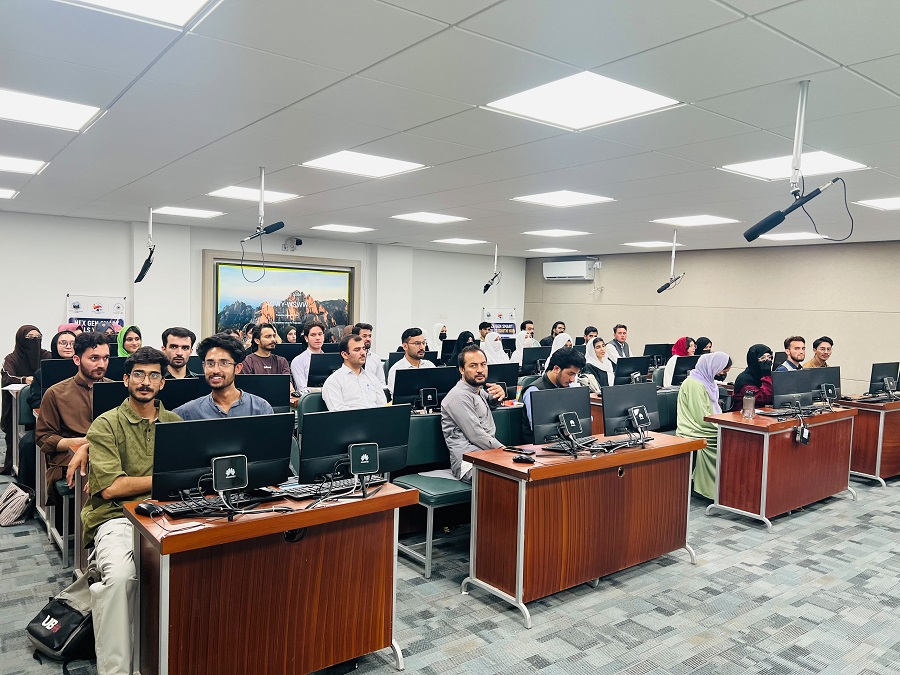
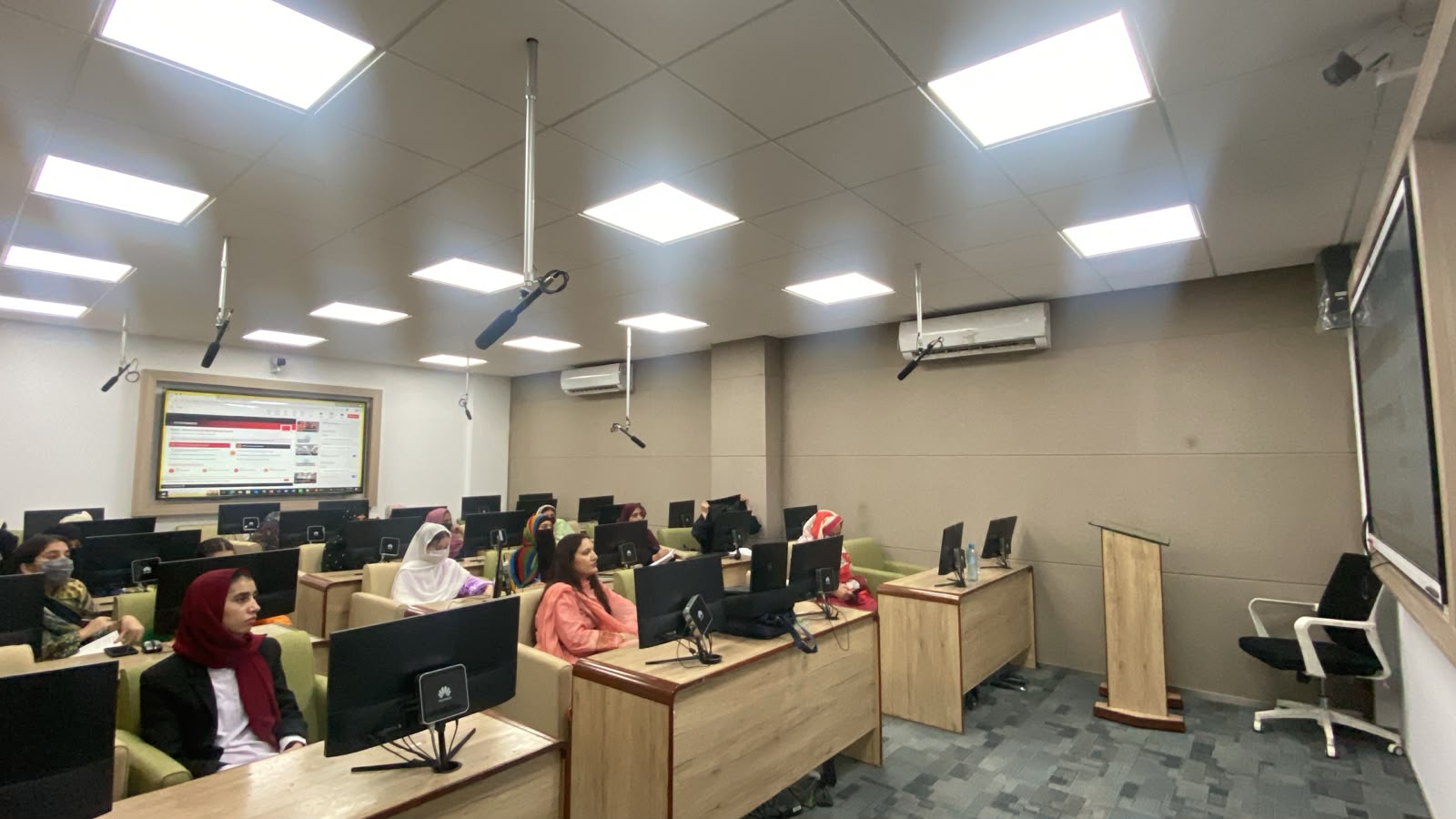
Learning Session on “Understanding China: Government, Growth, and Global Power” for the China Fellowship Programme 2026–27 held at Regional Connectivity Center (RCC), Shaheed Benazir Bhutto Women University (SBBWU), Peshawar, and Department of Political Science & International Relations, Hazara University, Mansehra
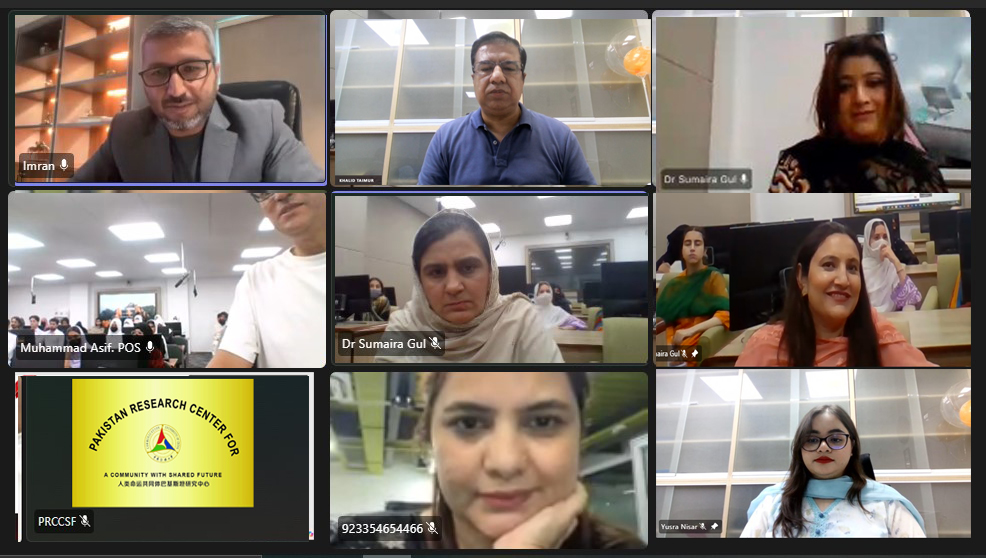
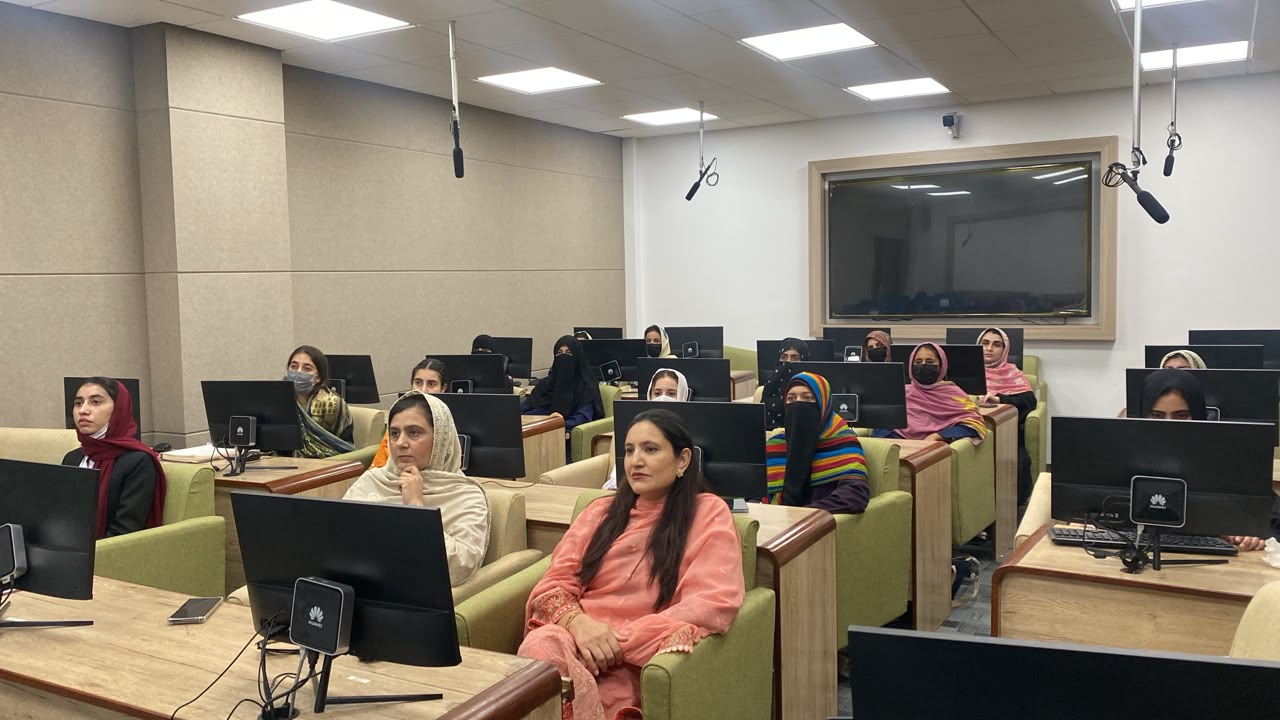
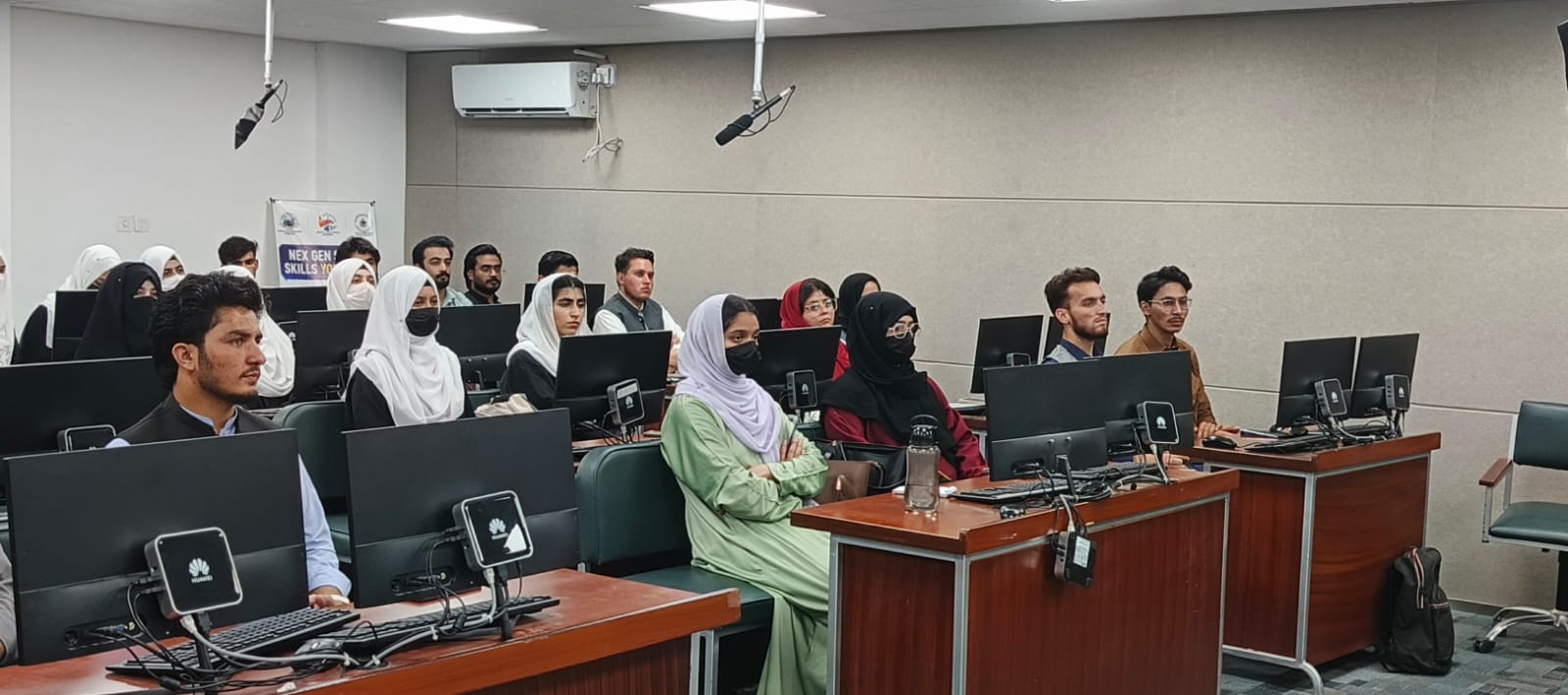
On 1st October 2026, the first session of the China Fellowship Programme 2026–27 was held. The China Fellowship Programme 2026–27 is jointly organized by the Pakistan Research Center for a Community with Shared Future (PRCCSF) in collaboration with the Embassy of the People’s Republic of China in Pakistan, with the support of the Institute for a Community with Shared Future (ICSF), Communication University of China (CUC), Beijing, and was held at the Regional Connectivity Center (RCC), Shaheed Benazir Bhutto Women University (SBBWU), Peshawar, and the Department of Political Science & International Relations, Hazara University, Mansehra.
The China Fellowship Programme 2026–2027 aims to provide young scholars, researchers, and students with a platform to explore China, Central Asia, regional connectivity, people-to-people connectivity, and contemporary international affairs through scholarly engagement, research, dialogue, and knowledge exchange.
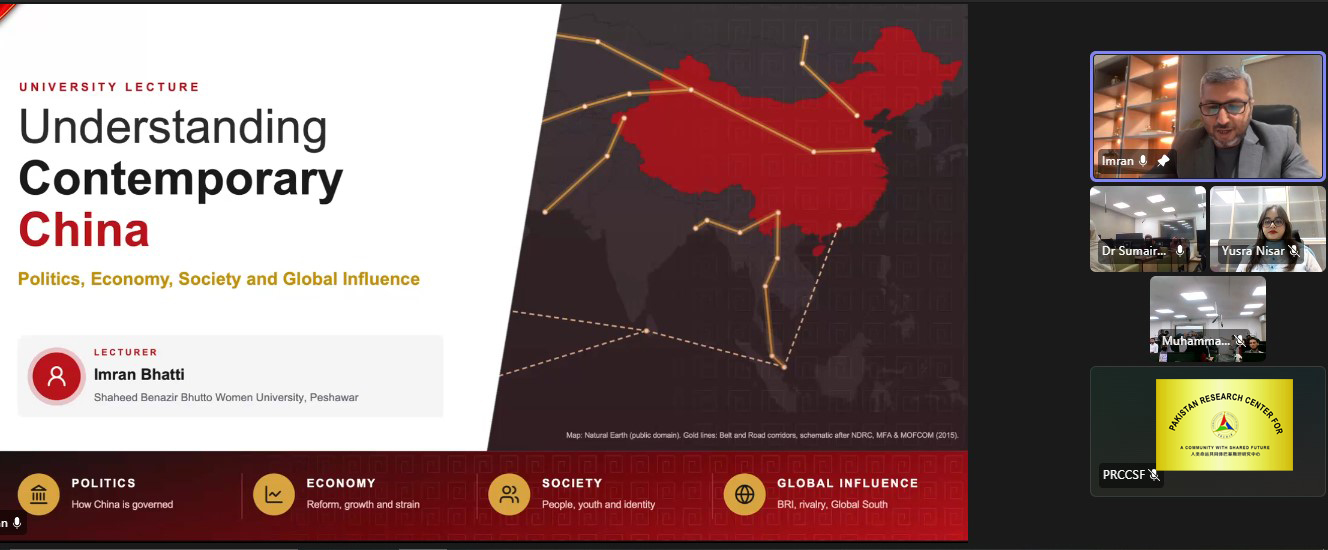
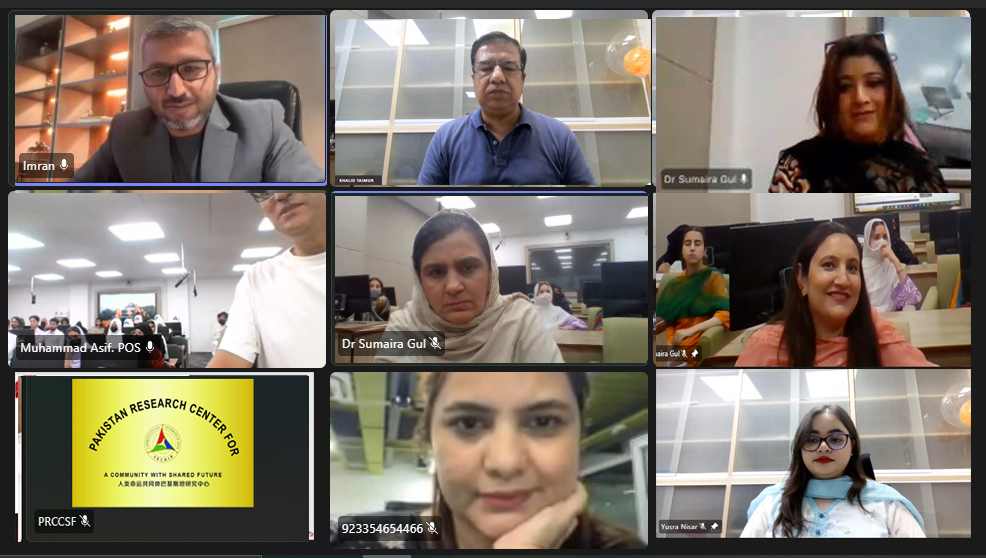
The session was led by Mr. Imran Bhatti, Scholar in Strategic Affairs and Global Governance, Senior Researcher in Geopolitics, Security, and Cyber Strategy, and Member of the Board of Experts at the Pakistan Research Center for a Community with Shared Future (PRCCSF), on the topic “Understanding China: Government, Growth, and Global Power — How China Governs, Grows, and Goes Global.”
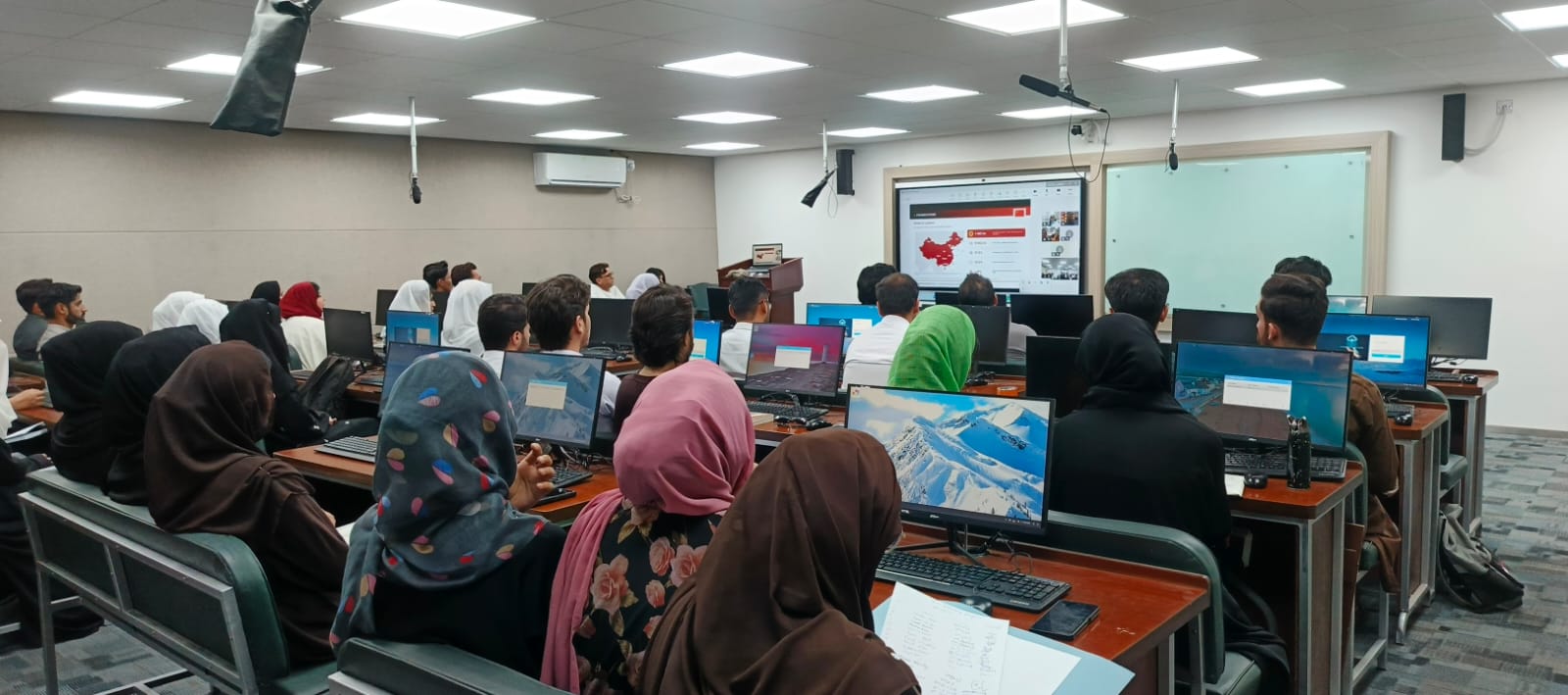
During the session, Mr. Bhatti provided an overview of contemporary China, beginning with its political and governance structure and the relationship between the Communist Party of China and the state. He discussed China’s economic transformation following the reform and opening-up period, including the development of Special Economic Zones, foreign investment, manufacturing, technological advancement, and China’s changing economic model. He also highlighted major social developments, including demographic change, urbanization, education, youth employment, national identity, culture, and the green transition.
Mr. Bhatti further discussed China’s growing global role, including its engagement with the Global South, the evolution of the Belt and Road Initiative, China’s relationship with major powers, and the changing international environment. The session also examined the relevance of China’s development experience for Pakistan, particularly in relation to CPEC, Special Economic Zones, human capital development, infrastructure, industrialization, and regional connectivity.
The session featured an engaging question-and-answer segment, during which students actively participated and exchanged perspectives with the speaker. The interactive discussion significantly enhanced participants’ understanding of China’s political system, economic development, demographic transformation, technological advancement, BRI, CPEC, and China’s evolving role in global affairs. Students were also encouraged to critically examine the opportunities and challenges associated with China’s development experience and its implications for Pakistan.
The session concluded with closing remarks by Mr. Khalid Taimur Akram, Executive Director of the Pakistan Research Center for a Community with Shared Future (PRCCSF), who appreciated the active participation of the students and the academic engagement generated during the session. He highlighted the importance of continued academic dialogue, research, and knowledge exchange in strengthening understanding of China–Pakistan relations and broader regional and global affairs.
The session was moderated by Ms. Yusra Binte Nisar, Research Assistant at the Pakistan Research Center for a Community with a Shared Future (PRCCSF), Islamabad, who facilitated the proceedings and coordinated the interaction between the speaker and participating students.
Gallery
.jpeg)
.jpeg)
.jpeg)
.jpeg)
.jpeg)