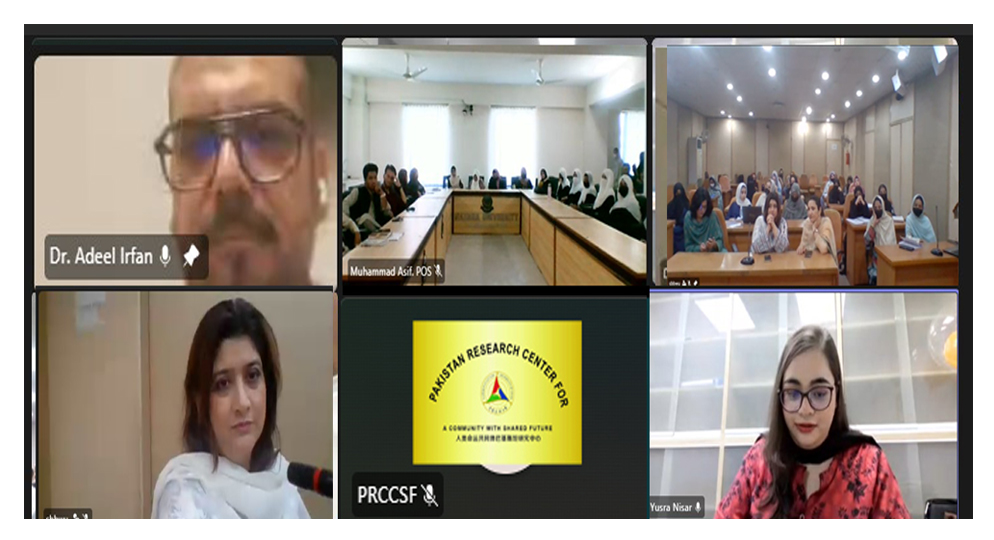
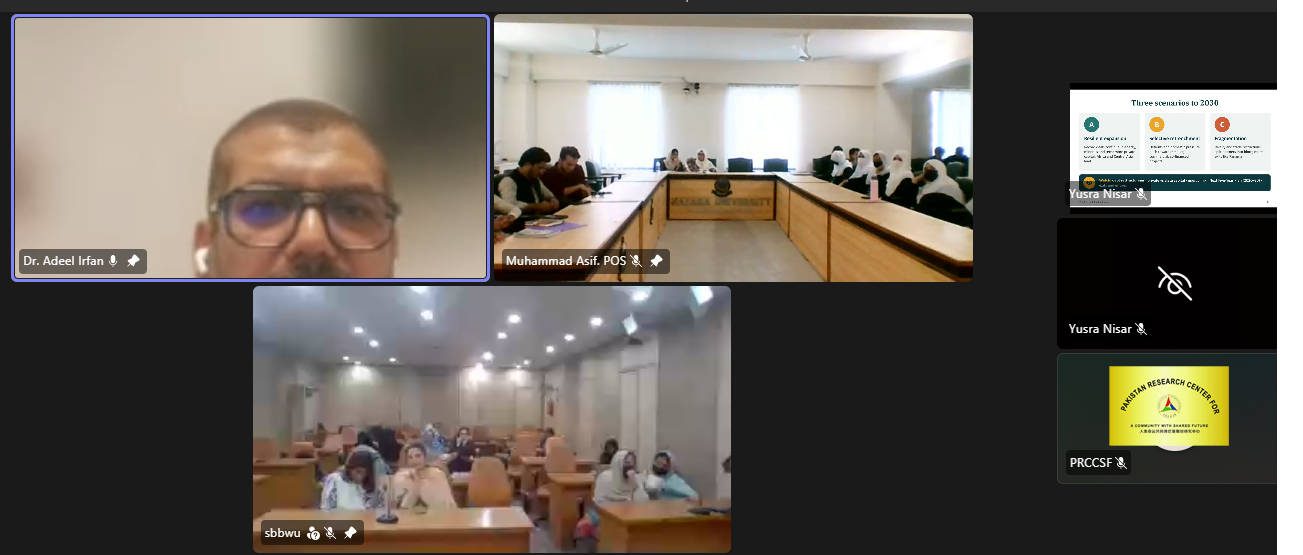
Learning Session on “The Belt and Road Initiative: Vision, Principles, and a Decade of Progress” for the China Fellowship Programme 2026–27 held at Regional Connectivity Center (RCC), Shaheed Benazir Bhutto Women University (SBBWU), Peshawar, and Department of Political Science & International Relations, Hazara University, Mansehra
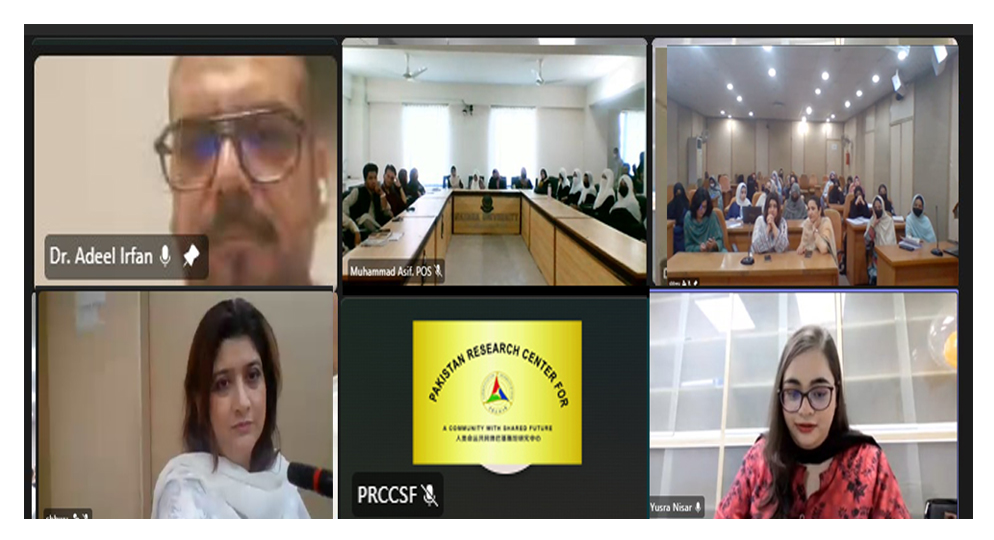
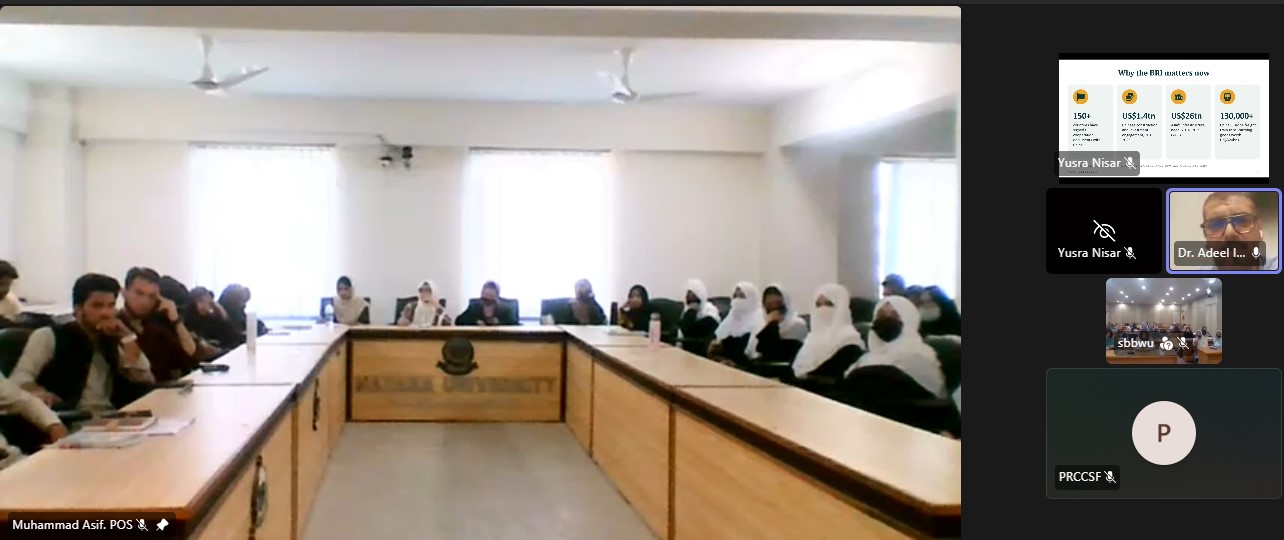
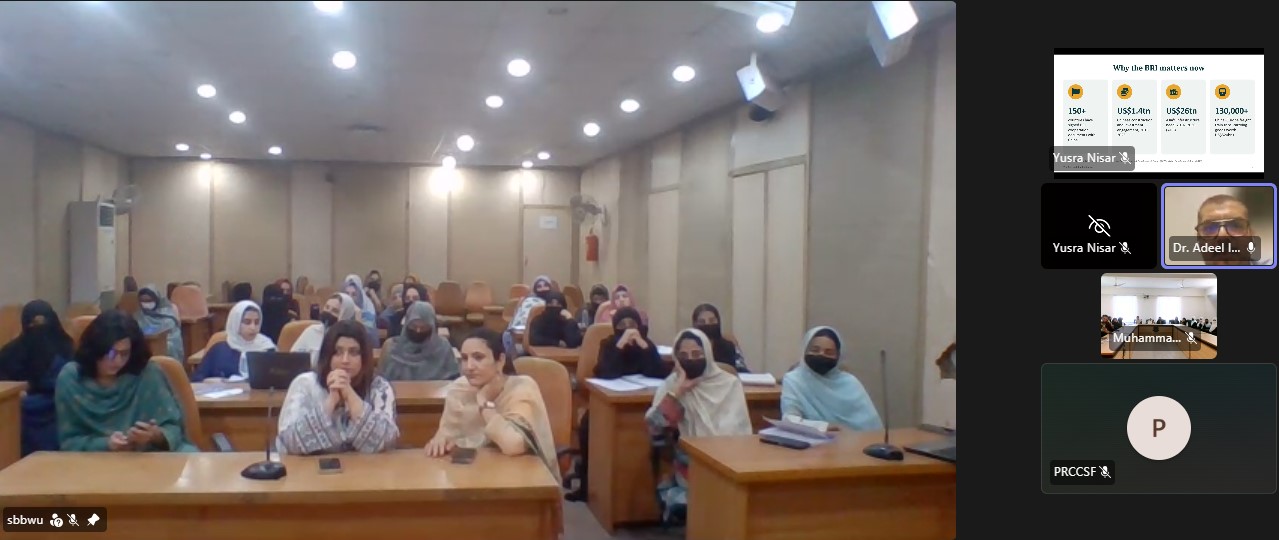
On 15th October 2026, the third session of the China Fellowship Programme 2026–27 was held at the Regional Connectivity Center (RCC), Shaheed Benazir Bhutto Women University (SBBWU), Peshawar, and the Department of Political Science & International Relations, Hazara University, Mansehra. The China Fellowship Programme 2026–27 is jointly organized by the Pakistan Research Center for a Community with Shared Future (PRCCSF) in collaboration with the Embassy of the People’s Republic of China in Pakistan, with the support of the Institute for a Community with Shared Future (ICSF), Communication University of China (CUC), Beijing.
The session was led by Dr. Adeel Irfan Rao, Assistant Professor at the University of Sargodha and Pakistan Research Center for a Community with Shared Future (PRCCSF) Fellow, who specializes in counterterrorism, peacebuilding, and conflict resolution. He holds a Ph.D. in International and Area Studies from Pukyong National University, South Korea.
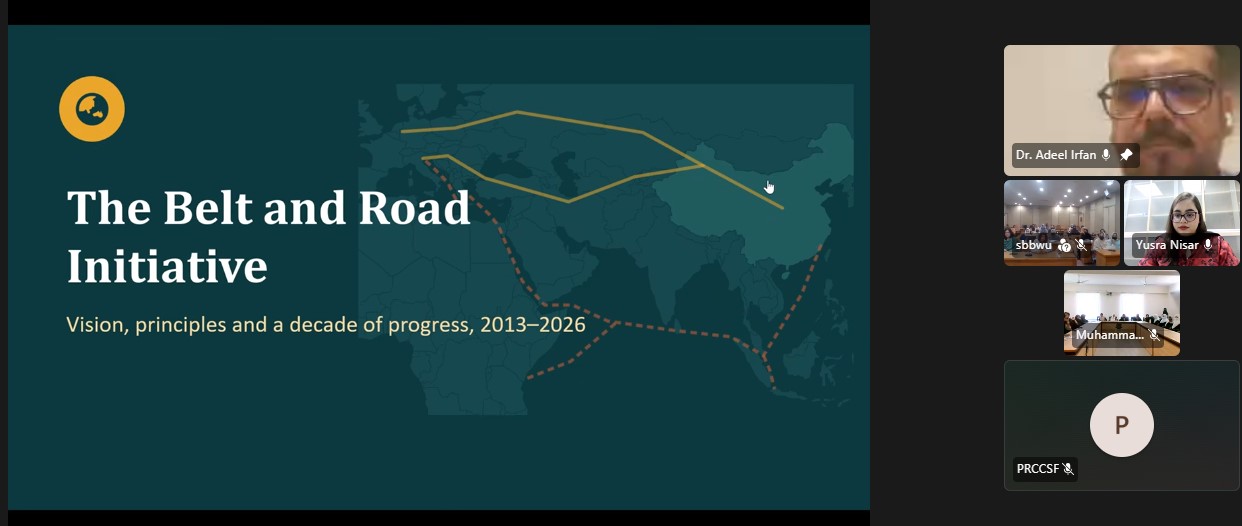
During the session, Dr. Adeel Irfan Rao delivered a comprehensive lecture on “The Belt and Road Initiative: Vision, Principles, and a Decade of Progress, 2013–2026,” highlighting the historical background, strategic vision, guiding principles, major developments, and evolving priorities of China’s Belt and Road Initiative (BRI).
Dr. Adeel explained the historical background, vision, and development of the Belt and Road Initiative (BRI), launched in 2013 through the Silk Road Economic Belt and the 21st-Century Maritime Silk Road. He discussed its land and maritime routes, six economic corridors, and five key areas of connectivity: policy coordination, facilities connectivity, unimpeded trade, financial integration, and people-to-people bonds. Particular attention was given to the China–Pakistan Economic Corridor (CPEC), including its role in transport infrastructure, energy development, roads, and Gwadar Port, alongside the BRI’s principles of openness, mutual learning, consultation, joint contribution, and shared benefits.
The session also highlighted the BRI’s progress from 2013 to 2026, featuring major projects such as the China–Europe Railway Express, China–Laos Railway, and Jakarta–Bandung high-speed railway. Dr. Adeel discussed the initiative’s evolving priorities, including high-quality development, green cooperation, technological innovation, and people-to-people exchanges, while addressing challenges related to debt sustainability, transparency, environmental protection, governance, and geopolitical competition. He emphasized the importance of responsible financing, sustainable planning, and mutual benefit in ensuring effective and long-term cooperation among participating countries.
Students actively participated in a question-and-answer session, exchanging perspectives with the speaker on the initiative’s development, guiding principles, regional implications, and future prospects. The discussion provided an opportunity to reflect on the role of connectivity and international cooperation in addressing shared development challenges.
The session was moderated by Ms. Yusra Binte Nisar, Research Assistant at the Pakistan Research Center for a Community with a Shared Future (PRCCSF), who facilitated the discussion and encouraged students to engage with the subject through questions and critical analysis.
Gallery