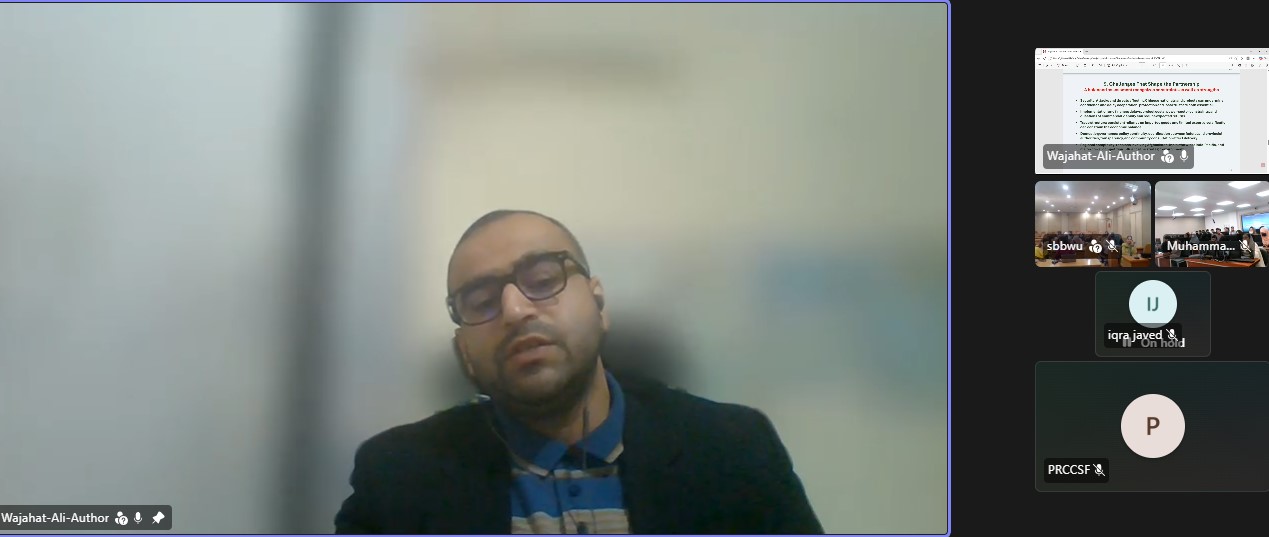
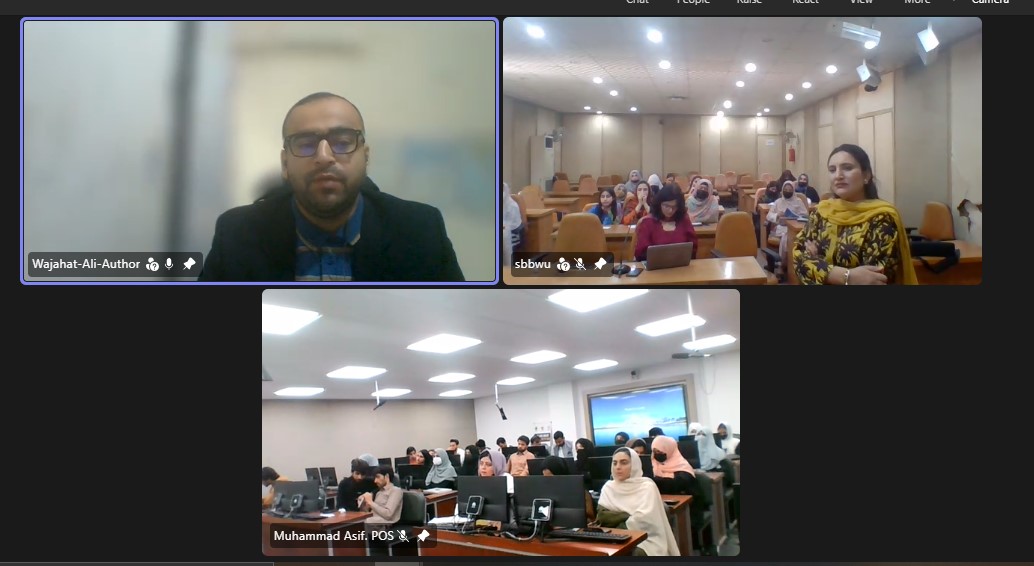
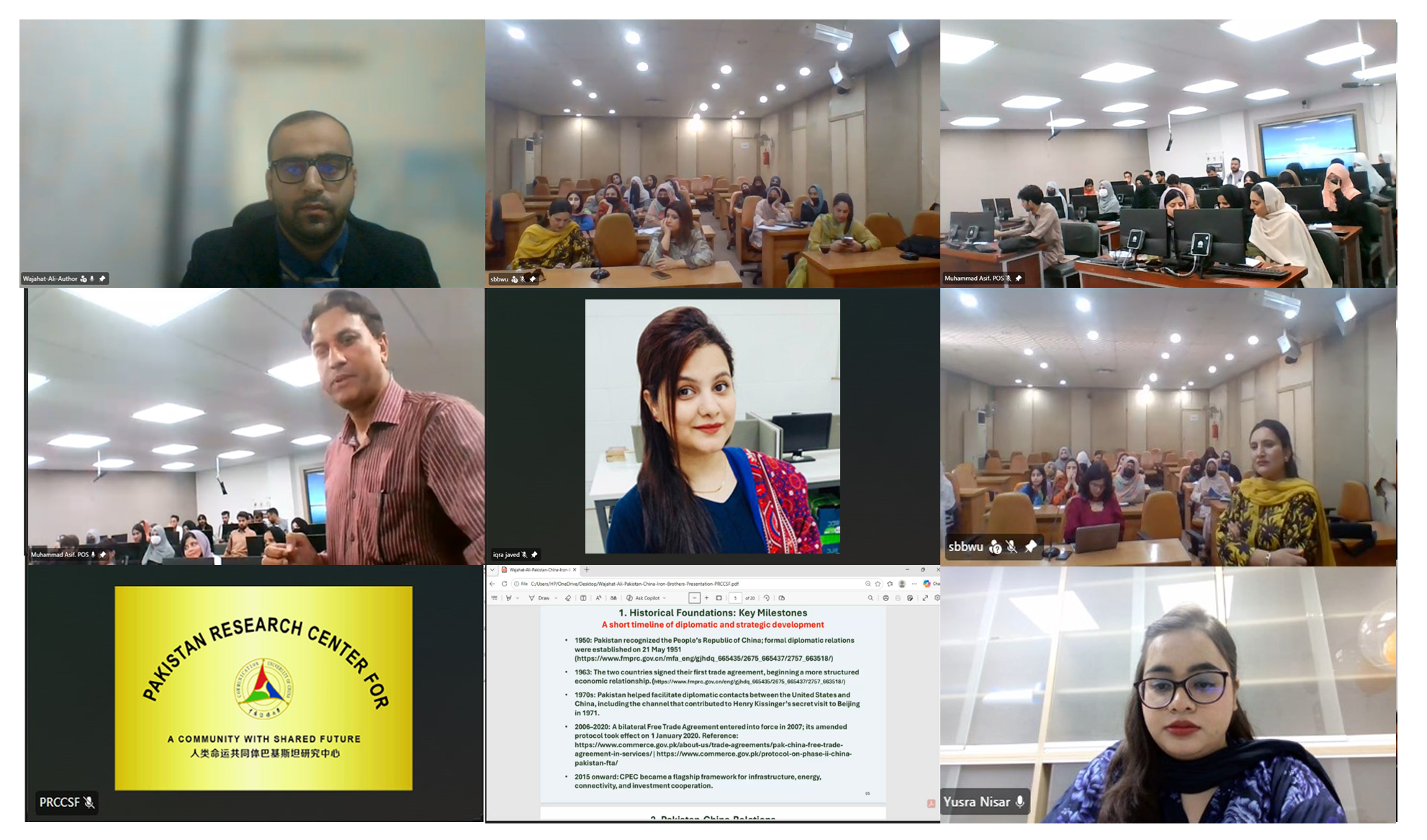
Learning Session on “Pakistan-China Relations: From Historic Friendship to Strategic Cooperation” for the China Fellowship Programme 2026–27 held at Regional Connectivity Center (RCC), Shaheed Benazir Bhutto Women University (SBBWU), Peshawar, and Department of Political Science & International Relations, Hazara University, Mansehra
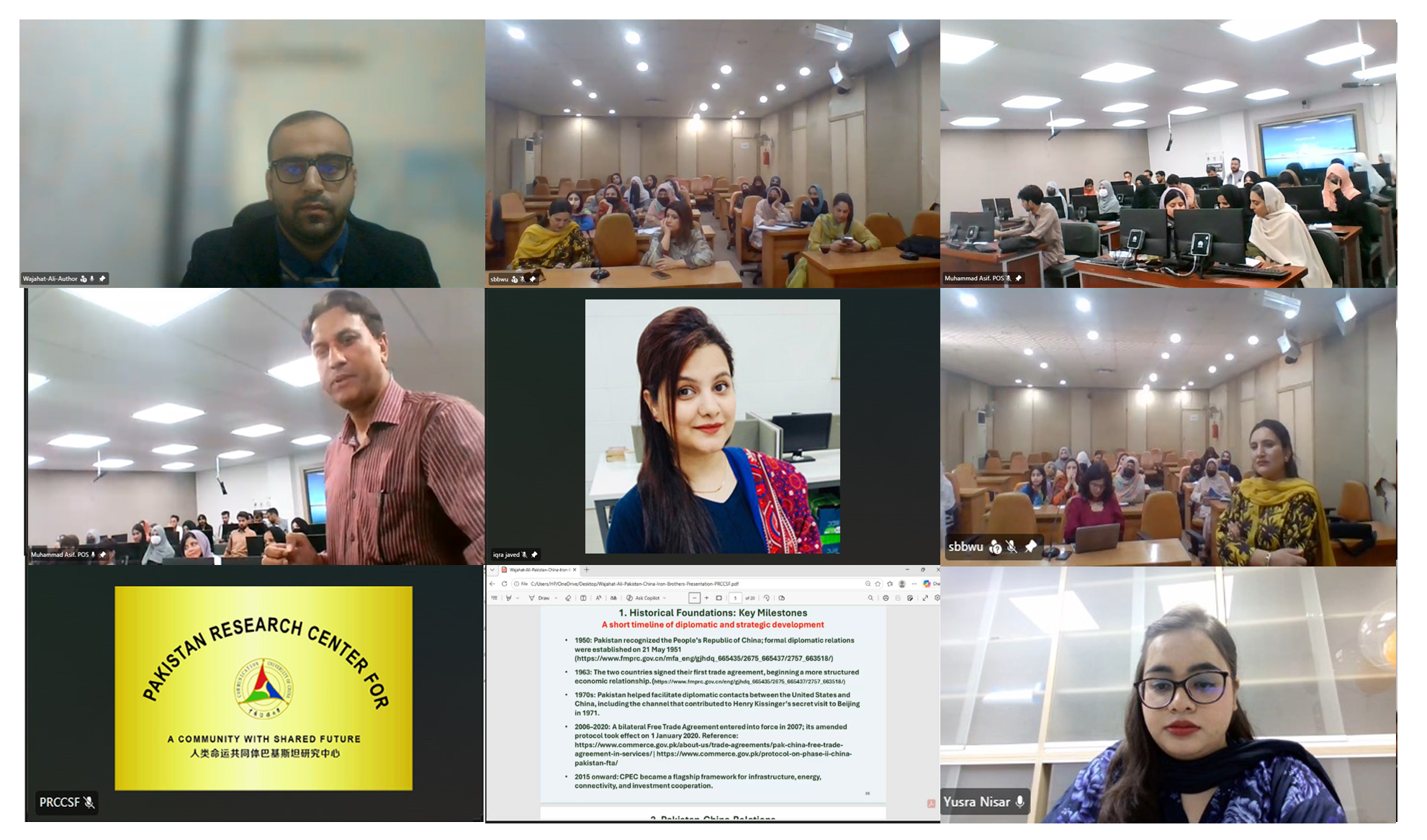
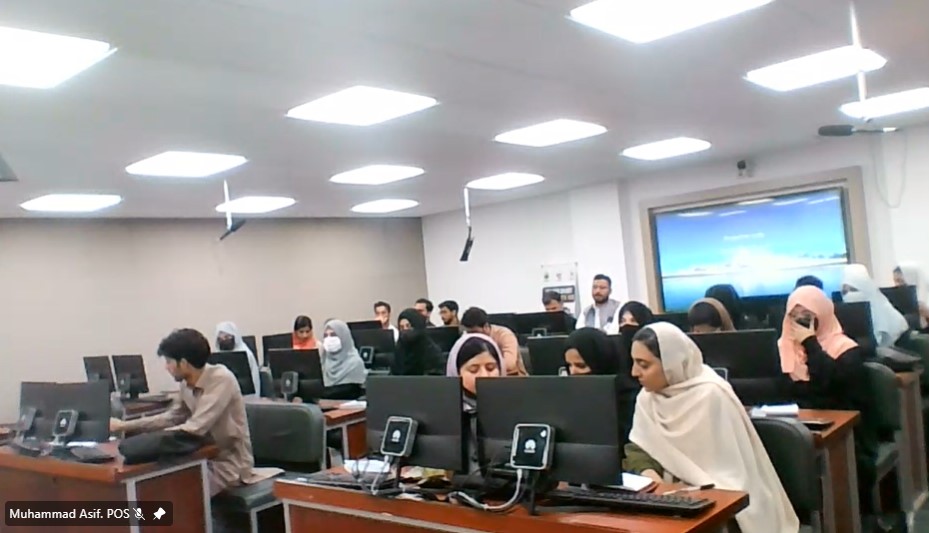
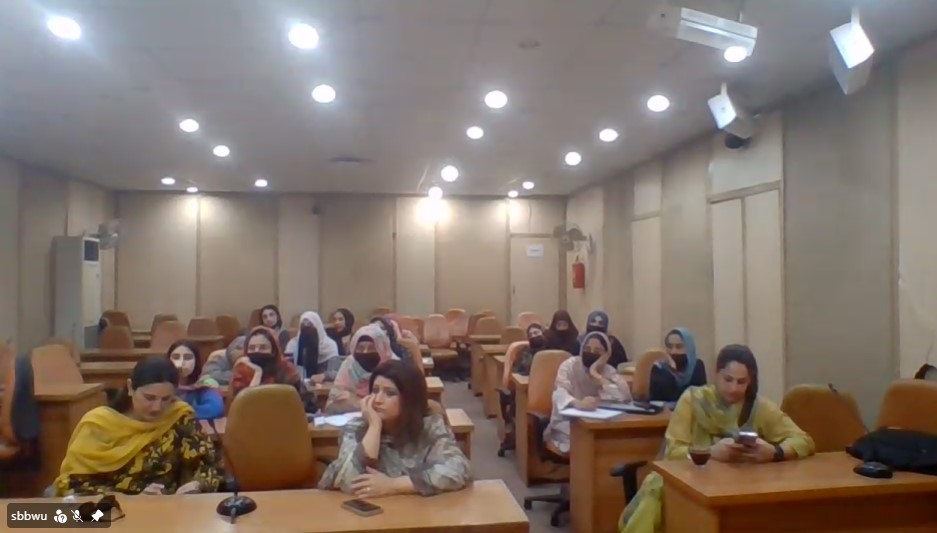
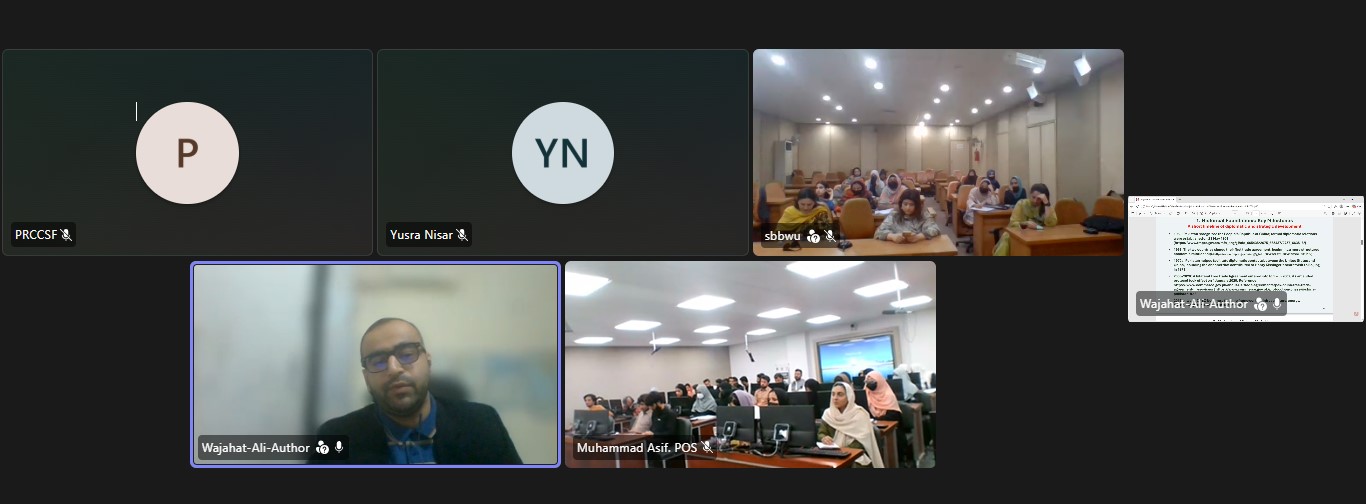
On 22nd October 2026, the fourth session of the China Fellowship Programme 2026–27 was held at the Regional Connectivity Center (RCC), Shaheed Benazir Bhutto Women University (SBBWU), Peshawar, and the Department of Political Science & International Relations, Hazara University, Mansehra. The China Fellowship Programme 2026–27 is jointly organized by the Pakistan Research Center for a Community with Shared Future (PRCCSF) in collaboration with the Embassy of the People’s Republic of China in Pakistan, with the support of the Institute for a Community with Shared Future (ICSF), Communication University of China (CUC), Beijing.
The session was led by Mr. Wajahat Ali is a PhD Research Scholar in International Relations at Minhaj University, Lahore, and Member Board of Experts, Pakistan Research Center for a Community with Shared Future (PRCCSF). He is also the author of “Understanding the Problematics of Conflict and Cooperation Between Pakistan and India Relations” and specializes in diplomacy, conflict and cooperation, human security, and interfaith harmony.
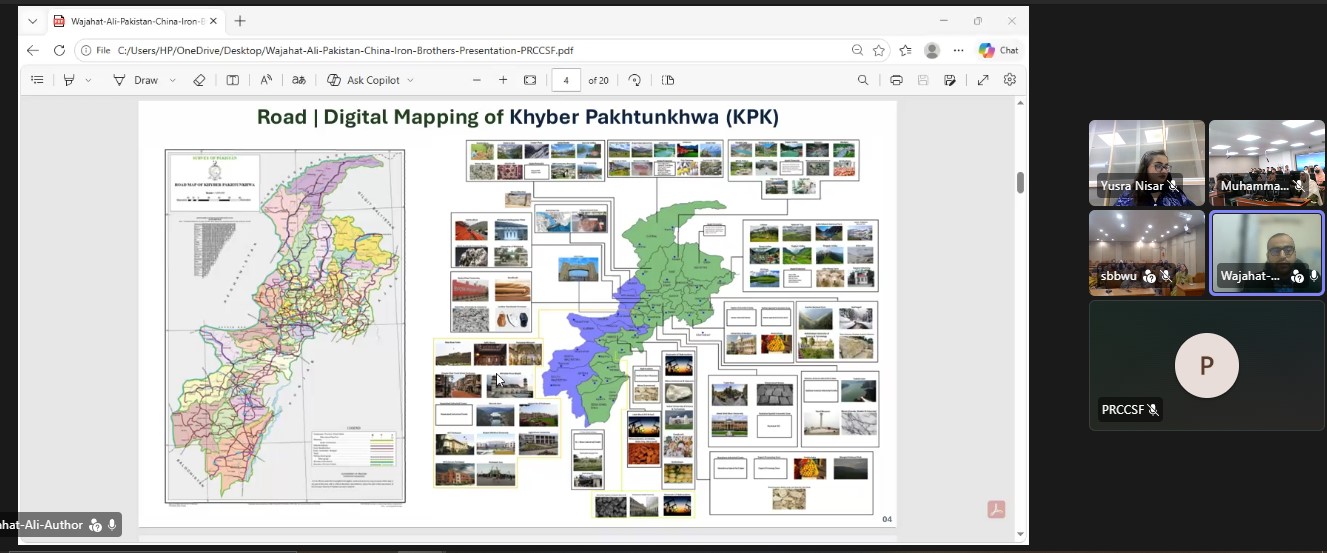
During the session, Mr. Wajahat Ali delivered a comprehensive lecture on “Pakistan-China Relations: Iron Brothers? History, Trust, and Strategic Depth,” highlighting the historical foundations of bilateral relations, the significance of 75 years of diplomatic ties, and the strategic cooperation between Pakistan and China. He discussed the importance of geographical connectivity, defence cooperation, diplomatic coordination, and economic development in strengthening this longstanding partnership. The lecture also examined the China-Pakistan Economic Corridor (CPEC), its role in infrastructure, energy, trade, investment, and regional connectivity, as well as its potential to create employment opportunities and promote sustainable economic development.
The speaker further explained that the strength of Pakistan-China relations depends not only on historical friendship and strategic trust but also on effective implementation, economic viability, security, good governance, technology transfer, and tangible benefits for local communities. He highlighted the need to strengthen trade, diversify exports, promote industrial cooperation, and enhance people-to-people exchanges to ensure that bilateral cooperation produces sustainable economic and social outcomes.
Students actively participated in the question-and-answer session, exchanging perspectives with the speaker on the future of Pakistan-China relations, CPEC's development potential, regional stability, and the importance of translating strategic cooperation into practical benefits for citizens. The discussion encouraged students to critically examine the opportunities and challenges shaping the bilateral partnership.
The session was moderated by Ms. Yusra Binte Nisar, Research Assistant at the Pakistan Research Center for a Community with a Shared Future (PRCCSF), who facilitated the discussion and encouraged students to engage with the subject through questions and critical analysis.
Gallery